
⚡ AI Infrastructure Wars: Chips, Clouds, and the Next Phase of Tech Power
AOTC Weekly Bites


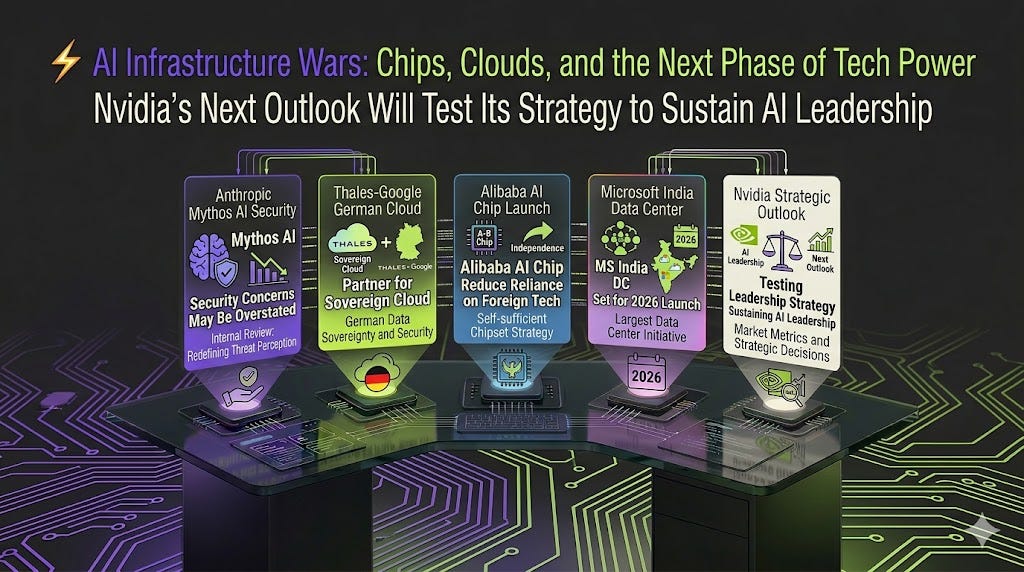
This week’s tech landscape highlights a growing shift from AI hype to AI infrastructure. The conversation is no longer just about models and chatbots. It is increasingly about who controls the chips, the data centers, and the cloud systems powering modern AI. Governments and companies around the world are racing to build domestic alternatives to reduce reliance on foreign technology, while tech giants continue investing billions to secure computing capacity.
From new AI chips in China to sovereign cloud projects in Europe and massive data center expansions in India, this week shows how the global technology race is increasingly centered on infrastructure, geopolitics, and long-term computing power.
🔎 This Week in Tech
Security Concerns Around Anthropic’s Mythos AI May Be Overstated
Thales and Google Partner to Build a Sovereign German Cloud
Alibaba Introduces New AI Chip to Reduce Reliance on Foreign Technology
Microsoft’s Largest India Data Center Set for 2026 Launch
Nvidia’s Next Outlook Will Test Its Strategy to Sustain AI Leadership
🔐Security Concerns Around Anthropic’s Mythos AI May Be Overstated

Recent discussions around the new Mythos AI model from Anthropic sparked fears that advanced AI systems could enable large-scale hacking or cybercrime. Some analysts warned that powerful models might make it easier for malicious actors to generate exploit code or automate cyberattacks.
However, new evaluations suggest these fears may be exaggerated. Early testing indicates that while large language models can assist with coding tasks, they still struggle with complex, real-world security exploits. Most models lack the contextual awareness and persistence needed to execute sophisticated hacking campaigns.
The debate highlights a recurring theme in AI development: balancing caution with realism. Security researchers emphasize that AI tools can assist attackers but also help defenders identify vulnerabilities faster. The bigger risk may lie not in autonomous hacking but in how widely these tools become accessible.
As AI models grow more capable, policymakers and companies will likely continue refining guardrails. But for now, the idea of AI unleashing uncontrollable cyberattacks appears less imminent than some early headlines suggested.
☁️ Thales and Google Partner to Build a Sovereign German Cloud
French defense and technology company Thales has partnered with Google to launch a sovereign cloud platform in Germany. The initiative aims to give German businesses and government institutions access to advanced cloud infrastructure while keeping sensitive data under local control.
The project is part of a broader European push for “digital sovereignty.” Many governments in Europe have become concerned about relying too heavily on U.S.-based cloud providers for critical infrastructure and data storage.
Under the agreement, Thales will operate the cloud platform while Google provides its cloud technology and infrastructure tools. The goal is to combine Google’s technical expertise with European governance and security standards.
This model could become increasingly common as countries seek to balance technological capability with national security concerns. Sovereign cloud systems are emerging as a compromise between global cloud innovation and local regulatory control.
For Google, the partnership also represents a strategic move to maintain access to European markets that are becoming more cautious about foreign tech dominance.
💬Alibaba Introduces New AI Chip to Reduce Reliance on Foreign Technology
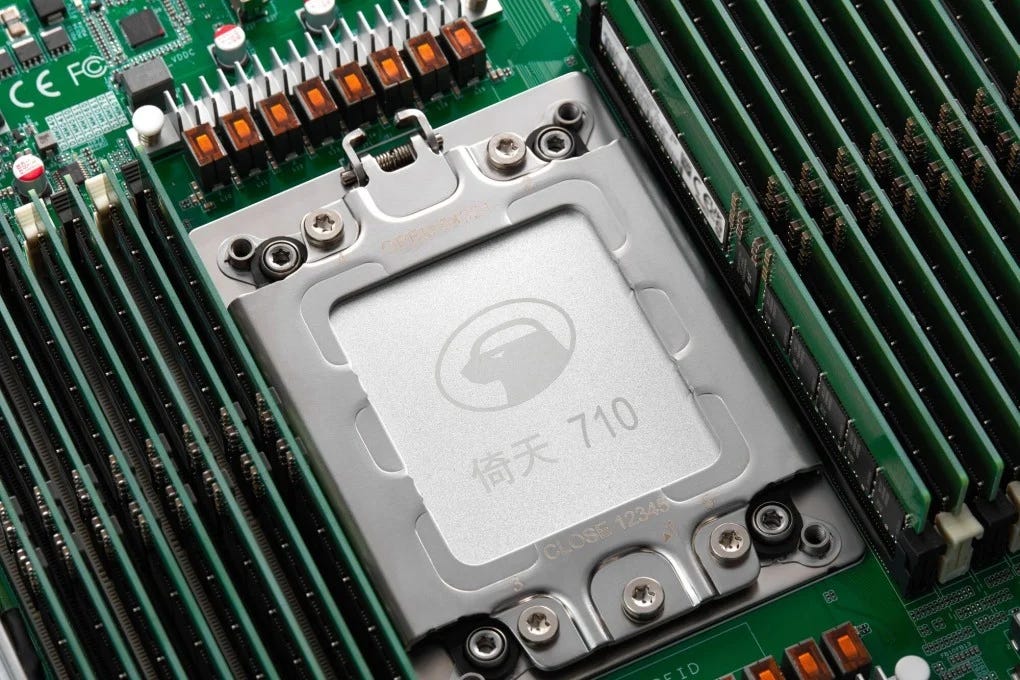
Chinese tech giant Alibaba has unveiled a new artificial intelligence chip as part of its effort to strengthen domestic semiconductor capabilities. The chip is designed to support AI training and inference workloads, which are becoming increasingly important as companies deploy large-scale machine learning systems.
China’s push to develop homegrown chips has accelerated in recent years due to export restrictions on advanced semiconductor technology. Access to high-end GPUs from companies like Nvidia has become more limited, forcing Chinese companies to invest heavily in local alternatives.
Alibaba’s new processor aims to power its cloud services and AI applications, including large language models and recommendation systems. Developing competitive chips could help the company reduce reliance on foreign hardware while strengthening China’s broader semiconductor ecosystem.
The move highlights the growing geopolitical dimension of the AI race. As AI workloads demand ever greater computing power, control over chip manufacturing and design has become one of the most strategic assets in the global tech industry.
📊 Microsoft’s Largest India Data Center Set for 2026 Launch

Microsoft is preparing to launch its largest data center in India by mid-2026, marking a major expansion of the company’s cloud infrastructure in one of the world’s fastest-growing digital markets.
The new facility is expected to support the increasing demand for cloud services, artificial intelligence workloads, and enterprise computing across the region. India has become a critical market for global cloud providers as startups, enterprises, and government agencies accelerate digital transformation.
Large-scale data centers are essential for training and running AI models, which require massive computing resources and energy capacity. Expanding infrastructure in India also helps Microsoft reduce latency for local users and meet regulatory requirements related to data storage.
The investment signals how global tech companies are spreading AI infrastructure across multiple regions instead of concentrating it in a few locations. As AI adoption grows, countries with strong data center ecosystems will play an increasingly important role in the global technology economy.
📊Nvidia’s Outlook Will Test Its Strategy to Sustain AI Leadership
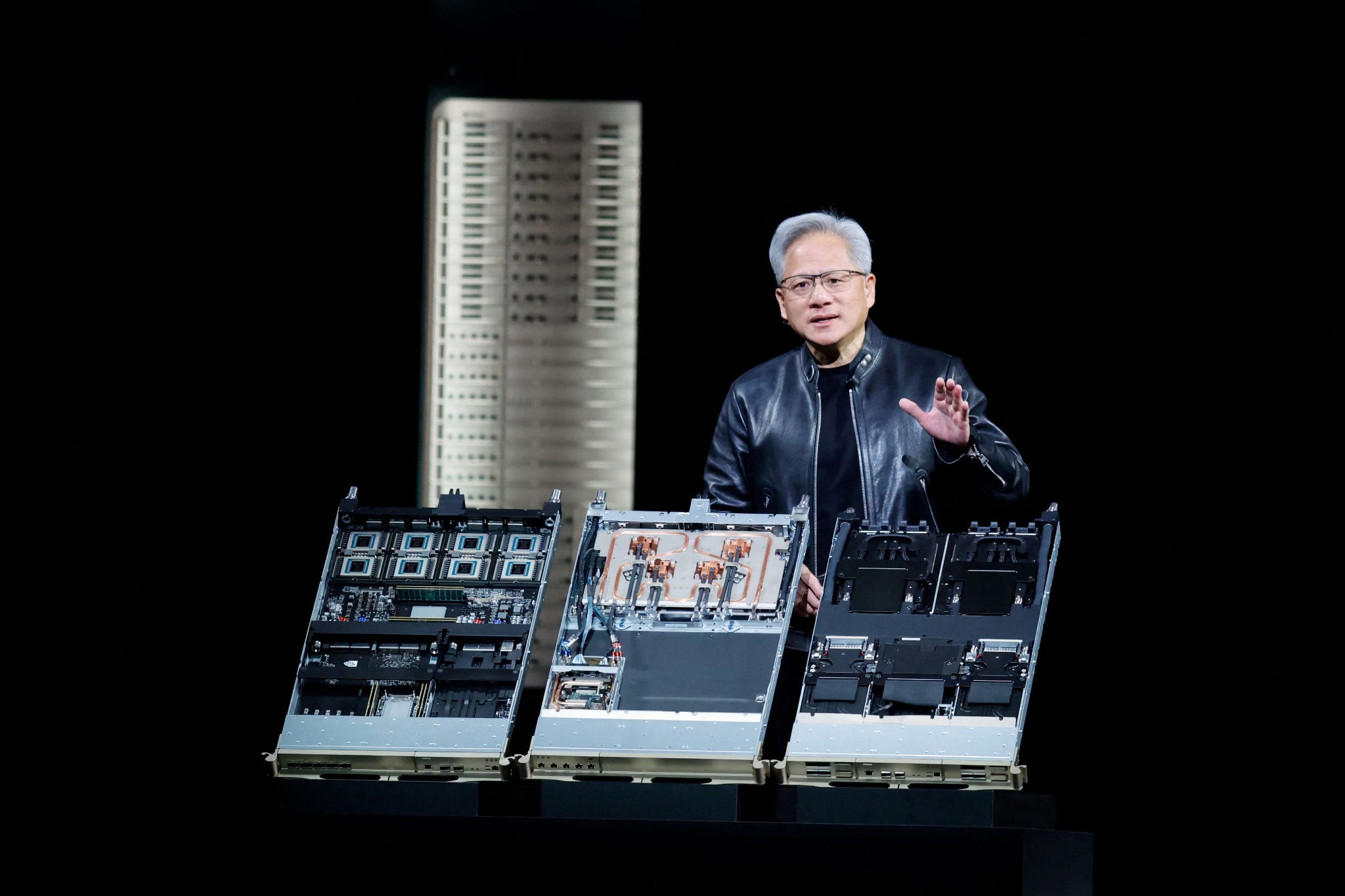
All eyes are on Nvidia as investors look to the company’s next financial outlook for signals about the future of the AI hardware market. Nvidia has become one of the most valuable technology companies in the world thanks to its dominance in GPUs used for AI training.
However, maintaining that leadership is becoming more challenging. Competitors are investing heavily in alternative chips, including custom processors developed by cloud providers and new semiconductor startups.
At the same time, governments and companies worldwide are working to reduce reliance on a single supplier for critical AI infrastructure. This shift could gradually reshape the competitive landscape for AI hardware.
Nvidia still holds a significant technological lead, particularly in its software ecosystem and AI developer tools. But its upcoming guidance will provide insight into whether demand for AI computing continues to grow at the extraordinary pace seen over the past two years.
For the broader tech industry, Nvidia’s performance is often viewed as a barometer for the overall health of the AI boom.
🚀 Try These Apps :
Descript– Edit podcasts and videos by simply editing text transcripts with built in AI tools.
Phind– A developer focused AI search engine that helps answer coding questions and generate solutions quickly.
HeyGen –Generate realistic AI presenter videos from text scripts for tutorials, marketing, and education.
🕵️ Under the Radar: Hackathons & Internships Most People Miss
This week’s Under the Radar is all about opportunities hiding in plain sight.Fewer applicants, better odds, and often direct access to mentors, judges, or hiring teams.
Below are handpicked opportunities worth your attention right now:
🔗 Hackathons
Rewards & Recognition
15 Lakhs, Total Prize Pool, Winning isn’t just about the cash. It is about showcasing your idea to education ecosystem leaders, Certificate of Participation, Networking opportunity, Technical support and guidance
The fellowship is a six-months (June to November 2026) online programme open to early-career professionals, postgraduate students, and researchers. It provides an opportunity to undertake original, policy-relevant research to examine the socio-economic impact of AI in India.
A 16-week fellowship producing peer-reviewed research in interpretability, AI governance, evaluation, and alignment.
The 2025 pilot had 50 fellows who produced 4 papers, 2 accepted to NeurIPS and ICASSP. Our 2026 cohort is planned for 48 fellows across 12 research groups. And something unexpected: we discovered that researchers from non-traditional pathways into AI safety consistently outperformed expectations when given structured peer accountability, suggesting the field is missing significant talent.
🔗 Internships & Programs (With deadlines)
Marketing Intern- Researcher at Blockchain https://job-boards.greenhouse.io/blockchain/jobs/7578640
Summer 2026 VC intern at Wintermute Remote: https://www.wintermute.com/company/opportunities/bc6834fe-e3ad-4c09-a4db-2fce3b13ee8f#apply_form
GTM Engineer Intern at Ether.FI remote:
Apply via email: nathan@ether.fi
⚡ Micro Tutorial: How to Evaluate an AI Tool Before Using It
With hundreds of new AI tools launching every month, developers and researchers need a quick method to evaluate whether a tool is actually useful. A simple 4-step evaluation framework can help.
1. Define the problem first
Before trying any AI tool, clearly define the task. For example: code generation, research summarization, dataset labeling, or UI generation. Tools should solve a specific workflow problem.
2. Test with a real task
Avoid judging tools using trivial prompts. Instead, test them with a realistic task such as summarizing a research paper, generating an API endpoint, or analyzing a dataset. This reveals practical strengths and limitations.
3. Measure output quality
Evaluate responses using three criteria: accuracy, clarity, and reproducibility. If the tool generates inconsistent or unverifiable results, it may not be reliable for production use.
4. Check ecosystem and integrations
Tools that integrate with developer workflows provide more value. Platforms such as GitHub, Notion, or IDE extensions allow AI tools to fit directly into daily workflows.
Pro tip: Document your evaluation results in a short comparison table. Over time, this builds a personal “AI tool benchmark” that helps you choose the right tool faster.
🔚 Wrapping Up
The global AI race is increasingly becoming a race for infrastructure. Powerful models may capture headlines, but the real competition is unfolding in chips, cloud platforms, and data centers. Companies are investing billions to secure computing power, while governments push for greater control over the technology ecosystems within their borders.
At the same time, discussions around AI safety and cybersecurity continue to evolve. As researchers study these systems more closely, the narrative is shifting from speculative fears to practical risk management.
If this week’s developments are any indication, the next phase of the AI era will be defined not just by smarter algorithms but by who builds and controls the systems that run them.
 | A guest post by
|